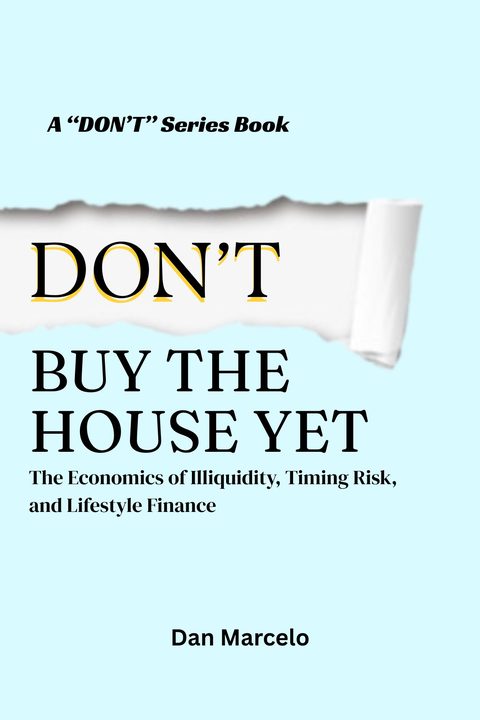
Don't Buy the House Yet
The Economics of Illiquidity, Timing Risk, and Lifestyle Finance
Everyone says you should buy a house as soon as you can. This book explains why that advice is often wrong.
Not an argument against homeownership. An argument for better timing.
Don’t Buy the House Yet shows how buying too early can quietly limit your flexibility, lock up your capital, and shape your life around debt—long before you’re ready for that commitment.
This is not an argument against homeownership.
It’s an argument for better timing.
Written for young professionals and first-time buyers, this book explains:
- why affordability is not the same as readiness
- how illiquidity and timing risk really work
- when renting is a strategic choice, not a failure
- and how to recognize the moment buying finally makes sense
If you plan to own a home someday, this book will help you do it from strength, not pressure.
Sometimes the smartest move is to wait.
Not yet.
Preface
Buying a house is one of the most consequential financial decisions most people will ever make. Yet it is also one of the least questioned.
Across cultures and income levels, homeownership is treated as a rite of passage—something to pursue as early as possible, often without regard to timing, liquidity, or opportunity cost. Rent is labeled as waste. Waiting is framed as failure. And buying “as soon as you can” is presented as proof of responsibility and success.
This book challenges that assumption.
Not because owning a home is bad—but because owning it at the wrong time can quietly undermine long-term wealth, flexibility, and financial resilience.
What This Book Is About
Don’t Buy the House Yet is not an argument against homeownership. It is an argument for economic timing.
The central idea is simple:
A house is not merely a place to live—it is a large, illiquid, leveraged financial position.
And illiquidity, when taken on too early, carries real economic costs.
This book examines homeownership through three lenses:
- Illiquidity – What you give up when capital is locked into property
- Timing Risk – The risk of buying before income, career, and lifestyle stabilize
- Lifestyle Finance – How financial decisions should serve life design, not social scripts
Instead of asking “Can I buy a house?”
This book asks the more important question:
“Is this the right time to buy one?”
Why This Matters Now
Modern careers are less stable, more mobile, and increasingly nonlinear. Income paths vary widely. Opportunities emerge—and disappear—quickly. In such an environment, liquidity is not a luxury; it is a strategic asset.
Yet many people commit to long-term, inflexible housing decisions precisely during the most volatile stage of their lives.
The result is not immediate failure, but something more subtle:
- Missed investment opportunities
- Reduced career mobility
- Financial stress disguised as “responsibility”
- A life shaped around a mortgage rather than choices
This book explains why that happens—and how to avoid it.
Who This Book Is For
This book is written for:
- Young professionals and first-time buyers
- Entrepreneurs and freelancers with variable income
- Overseas workers and globally mobile professionals
- Readers who are financially literate—but pressured to “settle down” early
It is especially for those who feel uneasy about buying property simply because “it’s time,” yet lack a clear economic framework to justify waiting.
What This Book Is Not
To set expectations clearly, this book is:
- Not anti-property
- Not anti-debt
- Not a call to rent forever
- Not a prediction of housing crashes
- Not ideological personal finance
It is grounded in applied economics, real estate finance, and household decision-making under uncertainty.
The goal is not to delay ownership indefinitely—but to buy later, with strength instead of pressure.
The Quiet Advantage
Those who delay homeownership strategically often gain something rarely discussed:
Optionality.
They invest earlier.
They move when opportunities arise.
They compound capital while others service debt.
When they finally buy, they do so from a position of stability, clarity, and surplus—not fear of missing out.
This book explains how that advantage is built.
If you are considering buying a home—or wondering whether you should wait—this book will help you make that decision not emotionally, not culturally, but economically.
And sometimes, the most rational move is not to buy at all.
Not yet.
 Don't Be Trapped by Credit Cards
 Don't Save Money
 Don't Chase Passion
 Don't Follow Your Degree
 Don't Go to Work
 Don't Trust Job Security
 Don't Rely on a Single Income
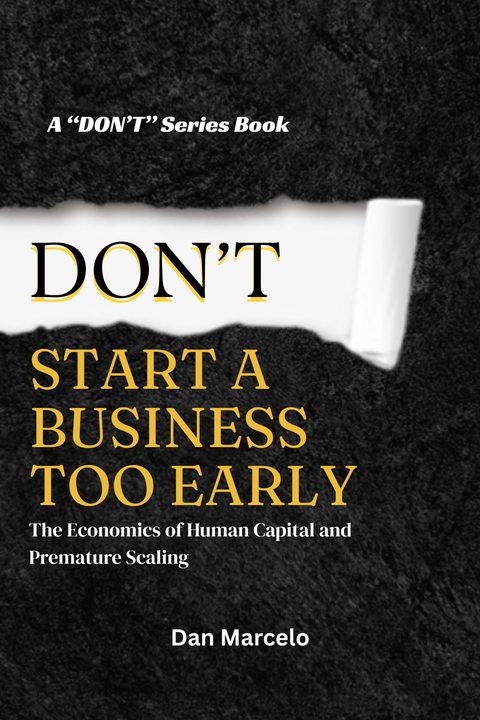 Don't Start a Business Too Early
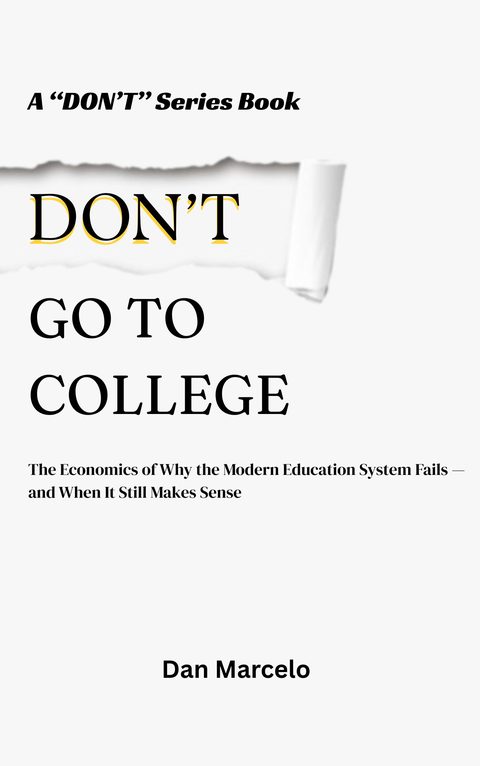 Don't Go to College
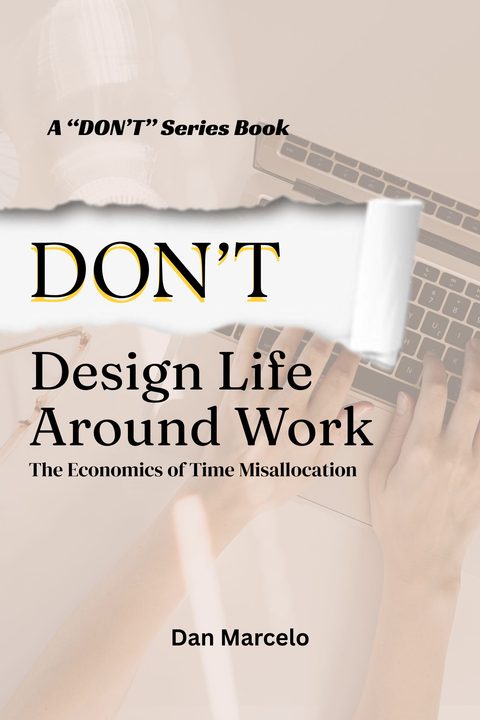 Don't Design Life Around Work
 Don't Live Paycheck to Paycheck
 Don't Rely on Pensions