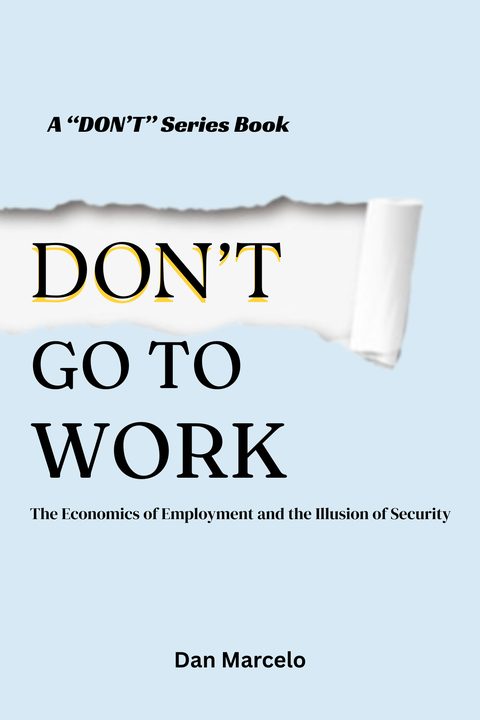
Don't Go to Work
The Economics of Employment and the Illusion of Security
Work is presented as stability. Economics tells a different story.
Why disciplined people still feel constrained
Don’t Go to Work is not an argument against effort, ambition, or employment. It is an economic examination of how modern work is structured—and why so many intelligent, disciplined people feel constrained despite doing everything they were told was responsible and “right”.
Work is often presented as stability.
In reality, it reallocates risk, caps upside, and concentrates dependency.
Using clear economic reasoning—not motivation, ideology, or hustle culture—this book explains:
- Why paychecks feel secure even when they aren’t
- How employment shifts risk rather than reducing it
- Why wages and raises rarely compound over time
- How control operates quietly through schedules, reviews, and culture
- Why smart people stay too long—and what they trade away by doing so
This book does not tell you to quit your job.
It tells you how the system actually works—so you can participate in it with clarity instead of illusion.
Don’t Go to Work is part of the “Don’t” series, a collection of concise, economics-driven books that examine widely accepted life rules and the incentives beneath them.
If work has ever felt more restrictive than it was promised to be, this book explains why—calmly, clearly, and without illusion.
Preface
This book was written for people who did what they were told—and still felt uneasy.
You studied, prepared, worked hard, and stayed responsible. You pursued stability not out of fear, but out of prudence. If something about work feels more constraining than it was promised to be, that feeling is not confusion. It is observation.
Don’t Go To Work does not argue that employment is wrong. It asks a narrower question: What does modern work actually optimize for—and who bears the risk when it doesn’t deliver what it implies?
The chapters that follow examine employment as an economic system. They focus on incentives, classifications, and trade-offs rather than motivation or ideology. Where conclusions feel uncomfortable, they are meant to clarify—not provoke. Understanding how a system functions does not require rejecting it, but it does change how you engage with it.
This book does not tell you to quit your job. It does not promise alternatives or guarantees. It is written to restore a missing distinction: the difference between predictability and security, stability and protection, permission and leverage.
If you continue working exactly as you are, this book will still be useful. If you make different choices later, it will have done its job as well. Clarity is the only objective here.
The rest is yours.
Not an argument against work. An explanation of how it works.
Buy on AmazonKeep reading
 Don't Be Trapped by Credit Cards
 Don't Save Money
 Don't Chase Passion
 Don't Follow Your Degree
 Don't Trust Job Security
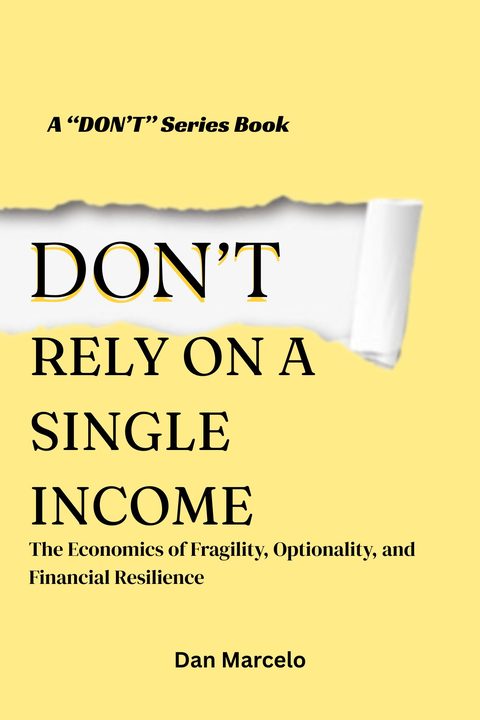 Don't Rely on a Single Income
 Don't Buy the House Yet
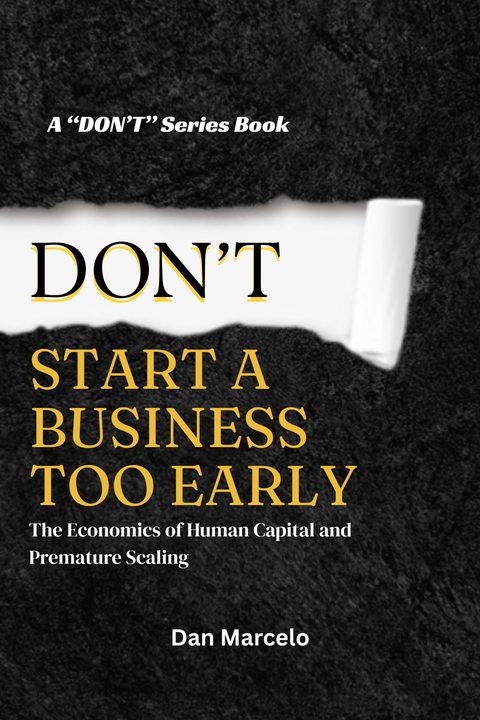 Don't Start a Business Too Early
 Don't Go to College
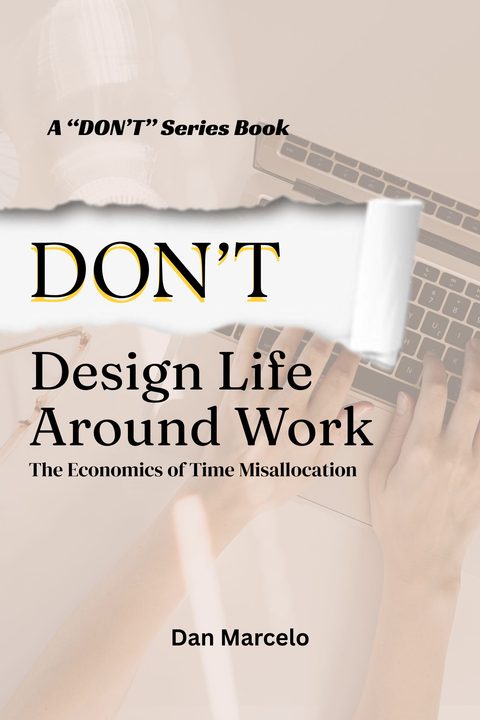 Don't Design Life Around Work
 Don't Live Paycheck to Paycheck
 Don't Rely on Pensions