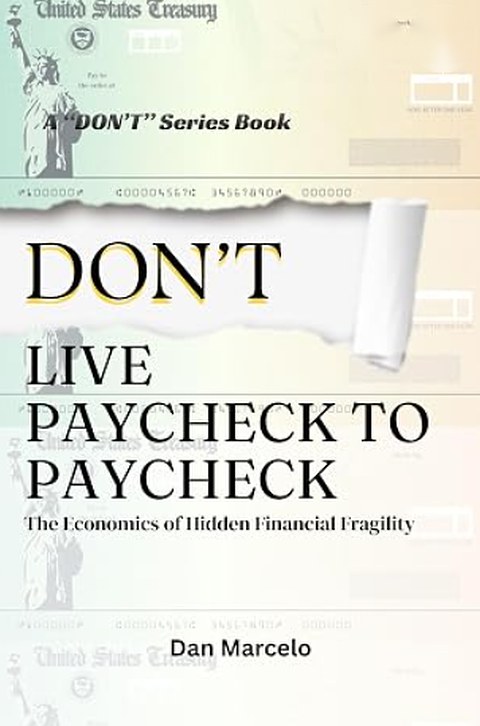
Don't Live Paycheck to Paycheck
The Economics of Hidden Financial Fragility
Most people believe living paycheck to paycheck is a budgeting problem. It isn’t.
Escaping paycheck living is not about earning more money.
It is a structural economic trap.
Millions of hardworking people earn income every month.
They pay their bills.
They manage their expenses.
Yet nothing seems to accumulate.
The paycheck arrives.
And then it disappears.
In Don't Live Paycheck to Paycheck, economist Danilo F. Marcelo Jr., DBA, reveals the hidden economic forces that keep households financially fragile—even when income increases.
This book goes beyond traditional personal finance advice and exposes the systems that quietly absorb your income.
You will discover:
- Why income alone rarely leads to wealth
- The cash flow structures that determine financial stability
- The six invisible financial drains that quietly destroy surplus
- Why budgeting alone often fails
- The paycheck dependency cycle that traps millions of workers
- The powerful moment when surplus changes everything
More importantly, you will learn how financial life transforms when income stops disappearing into consumption and begins turning into capital.
Because escaping paycheck living is not about earning more money.
It is about changing the structure of your finances.
This book introduces a simple but powerful framework:
Control fixed costs.
Engineer surplus.
Convert surplus into assets.
Once this process begins, the paycheck loses its power—and financial independence begins.
From the Don't Series
The Don’t Series by Danilo F. Marcelo Jr., DBA, explores the most common financial mistakes people make—and the economic principles needed to avoid them.
Each book reveals one critical insight:
Avoiding the wrong decisions often creates more wealth than chasing the right ones.
The Paycheck Trap
Every two weeks, the ritual repeats.
The salary arrives.
For a brief moment, there is relief.
The bank account looks healthy again. Bills that were waiting can finally be paid. Groceries can be bought. Fuel can be filled. A few small comforts can return.
Then the quiet draining begins.
The rent takes its share.
The car payment follows.
Utilities claim their portion.
Subscriptions quietly deduct themselves.
Credit card balances demand attention.
Within days, sometimes hours, the paycheck that once looked sufficient begins to shrink.
And before the next payday arrives, the familiar anxiety returns.
The account balance drops lower.
Unexpected expenses feel threatening.
Financial breathing space disappears.
So the cycle repeats.
Another paycheck.
Another temporary relief.
Another quiet disappearance.
Millions of hardworking people live inside this cycle.
They wake early.
They work long hours.
They carry responsibility for families, careers, and obligations.
Yet despite constant effort, something strange happens.
The money never stays.
The income flows in — but it never accumulates.
The Great Financial Paradox
From a distance, this situation looks puzzling.
People are working.
They are earning income.
They are participating in the economy.
Yet many remain financially fragile.
One medical bill can disrupt their finances.
One job interruption can trigger panic.
One unexpected repair can create debt.
Economically speaking, these individuals are not poor.
But they are structurally vulnerable.
They live paycheck to paycheck.
A Misleading Explanation
Conventional advice often blames the individual.
People are told:
- Budget better
- Spend less
- Be more disciplined
- Track expenses
These suggestions are not entirely wrong.
But they rarely solve the problem.
Because living paycheck to paycheck is not merely a budgeting problem.
It is a cash flow structure problem.
And more importantly, it is a systemic economic condition.
The Hidden Structure of the Paycheck Economy
Modern economic life quietly organizes millions of people into a predictable financial pattern.
The pattern looks like this:
Income arrives.
It is immediately allocated to:
- housing
- transportation
- food
- debt
- utilities
- digital services
- lifestyle consumption
By the time these obligations are satisfied, little or nothing remains.
The paycheck has performed its function:
It circulated through the economy.
But it did not become capital.
And this distinction is crucial.
Income Is Not Wealth
Many people confuse earning income with building wealth.
But the two are fundamentally different.
Income is temporary cash flow.
Wealth is accumulated capital.
Income disappears when it is spent.
Capital remains when it is invested.
A person can earn a respectable salary and still remain financially fragile if income continuously converts into consumption rather than assets.
This is the essence of the paycheck trap.
The Psychological Comfort of the Paycheck
Ironically, the paycheck also creates a sense of security.
Regular income produces:
- predictability
- routine
- emotional reassurance
People feel safe because they know another paycheck will arrive.
But this comfort can hide a deeper vulnerability.
If the paycheck stops, the entire system collapses.
Without accumulated capital, there is no financial buffer.
The worker must return to the same cycle.
Work. Earn. Spend. Repeat.
The Invisible Cage
From the outside, this life appears stable.
The bills are paid.
The job continues.
The routine remains intact.
But economically speaking, something important is missing.
Surplus.
Without surplus, there is no capital formation.
Without capital, there is no financial independence.
Without independence, the paycheck becomes a form of quiet dependence.
Not dramatic.
Not oppressive.
But persistent.
An invisible cage built from recurring expenses and disappearing income.
The Real Question
The real question is not why people spend money.
Consumption is natural.
The real question is this:
Why does income disappear so completely that nothing remains to build capital?
Answering that question requires examining the economic forces that quietly shape modern financial life.
And once those forces are understood, the paycheck trap becomes much easier to see.
What This Book Will Reveal
This book is not about guilt or financial shaming.
It is about understanding the economic architecture behind financial fragility.
You will discover:
- Why millions of workers remain financially vulnerable despite steady income
- How modern consumption systems quietly absorb household cash flow
- Why budgeting alone rarely solves paycheck living
- And how economic surplus becomes the turning point between fragility and financial stability
Because escaping paycheck-to-paycheck living does not begin with discipline.
It begins with economic awareness.
Once you see the system clearly, you can begin to step outside of it.
A Final Thought
The paycheck itself is not the enemy.
The problem is what happens to it.
If income arrives only to disappear again, the cycle continues forever.
But when even a small portion of income begins to survive the cycle — when it becomes surplus, and then capital — something powerful begins to change.
That is where financial transformation begins.
And that is where this book now turns.
 Don't Be Trapped by Credit Cards
 Don't Save Money
 Don't Chase Passion
 Don't Follow Your Degree
 Don't Go to Work
 Don't Trust Job Security
 Don't Rely on a Single Income
 Don't Buy the House Yet
 Don't Start a Business Too Early
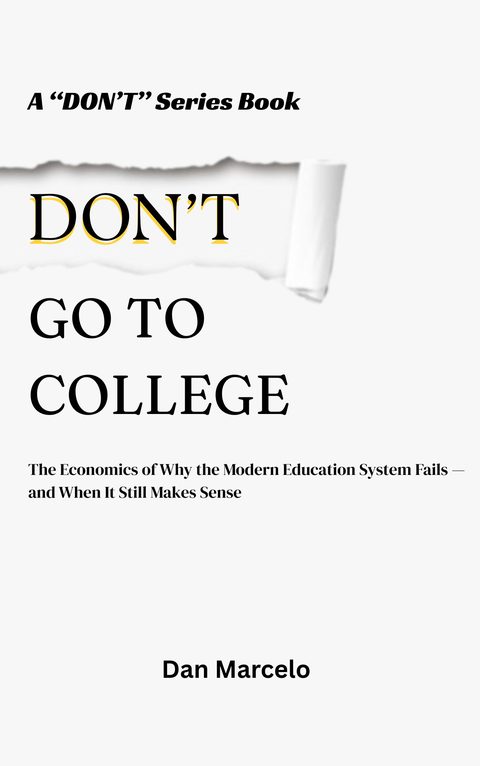 Don't Go to College
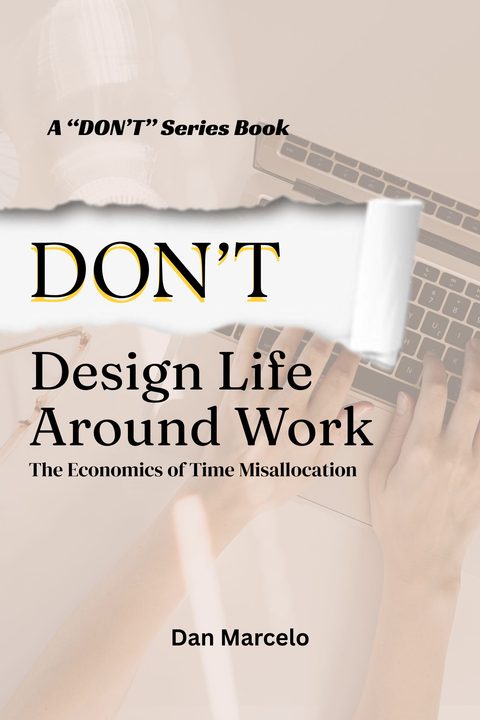 Don't Design Life Around Work
 Don't Rely on Pensions