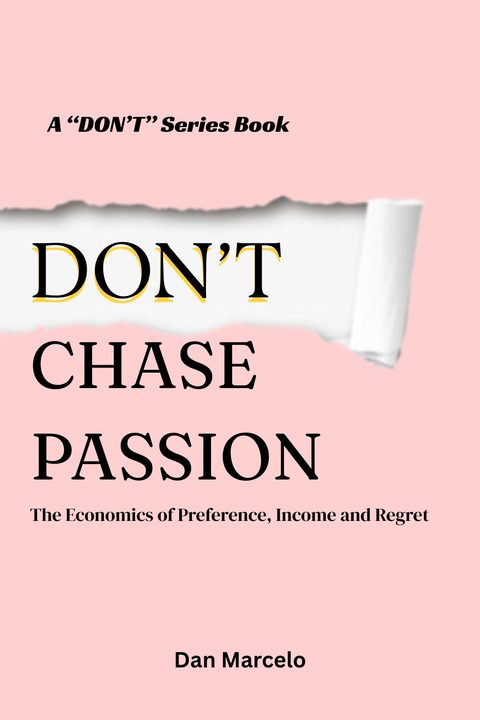
Don't Chase Passion
The Economics of Preference, Income, and Regret
Everyone tells you to do what you love. Few explain what it costs.
The reason is economic. The mistake is sequential.
You were taught to trust passion.
This book explains why that advice often backfires.
Don’t Chase Passion is not a self-help book. It is not motivational. It does not offer steps, formulas, or inspirational stories.
It does something more uncomfortable.
It explains—clearly and calmly—why many intelligent, sincere people who followed their passion end up with less freedom than expected, and why that outcome has very little to do with talent, courage, or effort.
The reason is economic.
The mistake is sequential.
The regret arrives late.
What this book examines
This book breaks down the hidden mechanics behind passion-driven decisions:
- Why liking something is not the same as planning a life around it
- How passion becomes a winner-take-most trap
- Why opportunity cost is invisible until it’s unrecoverable
- How income quietly expands—or collapses—future choices
- Why regret is a lagging indicator, not a personal failure
- When passion works—and when it destroys optionality
- Why timing matters more than sincerity
Nothing here is theoretical. These outcomes repeat because the structure repeats.
What this book is not
- Not anti-passion
- Not anti-meaning
- Not anti-ambition
It is anti mispricing.
It challenges the habit of treating preferences as strategies, identity as immunity, and desire as destiny—without shouting, shaming, or offering false reassurance.
Who this book is for
This book is for readers who:
- Did what they were told and still feel constrained
- Sense that “follow your passion” left something out
- Want clarity, not comfort
- Prefer calm explanations over loud motivation
- Are tired of advice that ignores time, income, and reversibility
If you’re looking for encouragement, this book isn’t it.
If you’re looking for recognition, it will feel familiar.
Why this book feels different
The tone is quiet on purpose.
Nothing here needs urgency to be true. These ideas reveal themselves slowly—usually after decisions harden and alternatives disappear. This book names that process before it feels personal.
It doesn’t tell you what to do.
It shows you what happens if you don’t think about sequence.
Part of the “Don’t” series
Don’t Chase Passion is part of the ongoing “Don’t” series—a set of Amazon-native books that examine popular life advice through the lens of economics, incentives, and real constraints.
Each book stands alone.
Together, they form a system.
The problem was never passion.
It was trusting it too early.
Preface
This book begins with an uncomfortable observation:
Many people who followed their passion did not fail —
they simply arrived somewhere more constrained than they expected.
They are not bitter.
They are not unsuccessful.
They are often competent, respected, and stable.
And yet, something narrowed.
This book is about how that narrowing happens.
Why This Question Matters Now
“Do what you love” has become one of the most trusted instructions of modern life. It is offered in schools, workplaces, commencement speeches, and private conversations. It is framed as courageous, authentic, and wise.
Rarely is it examined economically.
When passion is discussed, it is treated as sacred — immune from trade-offs, timing, and cost. When outcomes disappoint, the explanation turns inward: lack of grit, lack of faith, lack of talent.
This book takes a different approach.
It asks what happens when passion is treated not as identity, but as a preference operating inside real constraints.
What This Book Is Trying to Do
This book does not tell you to abandon what you love.
It asks you to look closely at when you commit to it — and what you give up by doing so early.
It explores how:
- preference quietly hardens into obligation
- income changes the geometry of choice
- timing determines whether passion liberates or traps
- regret appears long after decisions feel settled
None of these outcomes are mysterious. They are predictable once sequence is taken seriously.
What This Book Is Not
This is not a book about motivation.
It is not a book about hustle.
It is not a book about finding purpose.
It does not offer steps, habits, or frameworks to “optimize your passion.”
Instead, it explains why passion often collapses under pressure — and why it survives only when it no longer has to perform.
How to Read This Book
Read this book slowly.
Not because it is difficult, but because its ideas tend to surface later — when you notice your own decisions reflected back without judgment.
You are not expected to agree with everything here.
You are only expected to follow the logic honestly.
If parts of this book feel unsettling, that reaction is not failure.
It usually means a cost has finally been named.
Before You Begin
This book assumes one thing about you:
That you care not just about what feels meaningful now, but about what preserves your freedom later.
Everything that follows is written for that reader.
 Don't Be Trapped by Credit Cards
 Don't Save Money
 Don't Follow Your Degree
 Don't Go to Work
 Don't Trust Job Security
 Don't Rely on a Single Income
 Don't Buy the House Yet
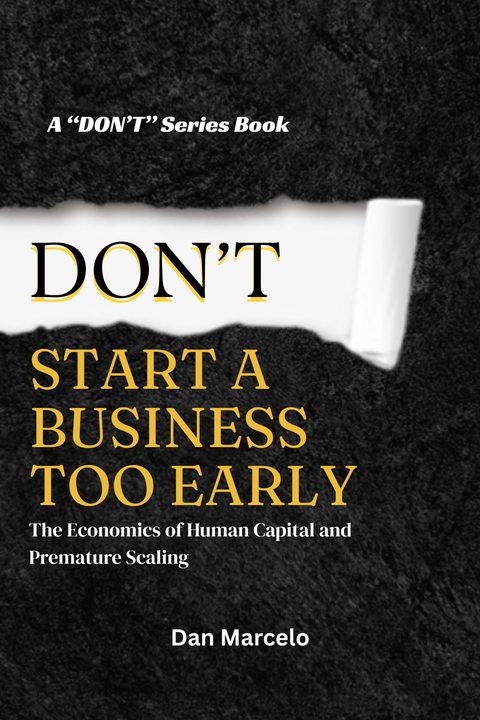 Don't Start a Business Too Early
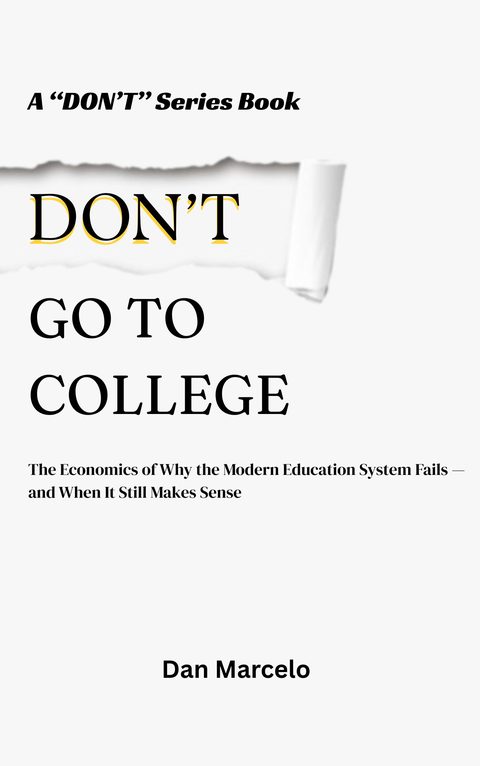 Don't Go to College
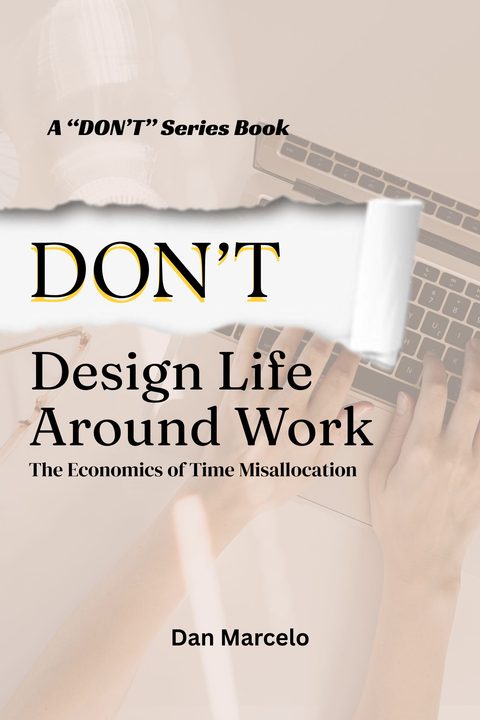 Don't Design Life Around Work
 Don't Live Paycheck to Paycheck
 Don't Rely on Pensions